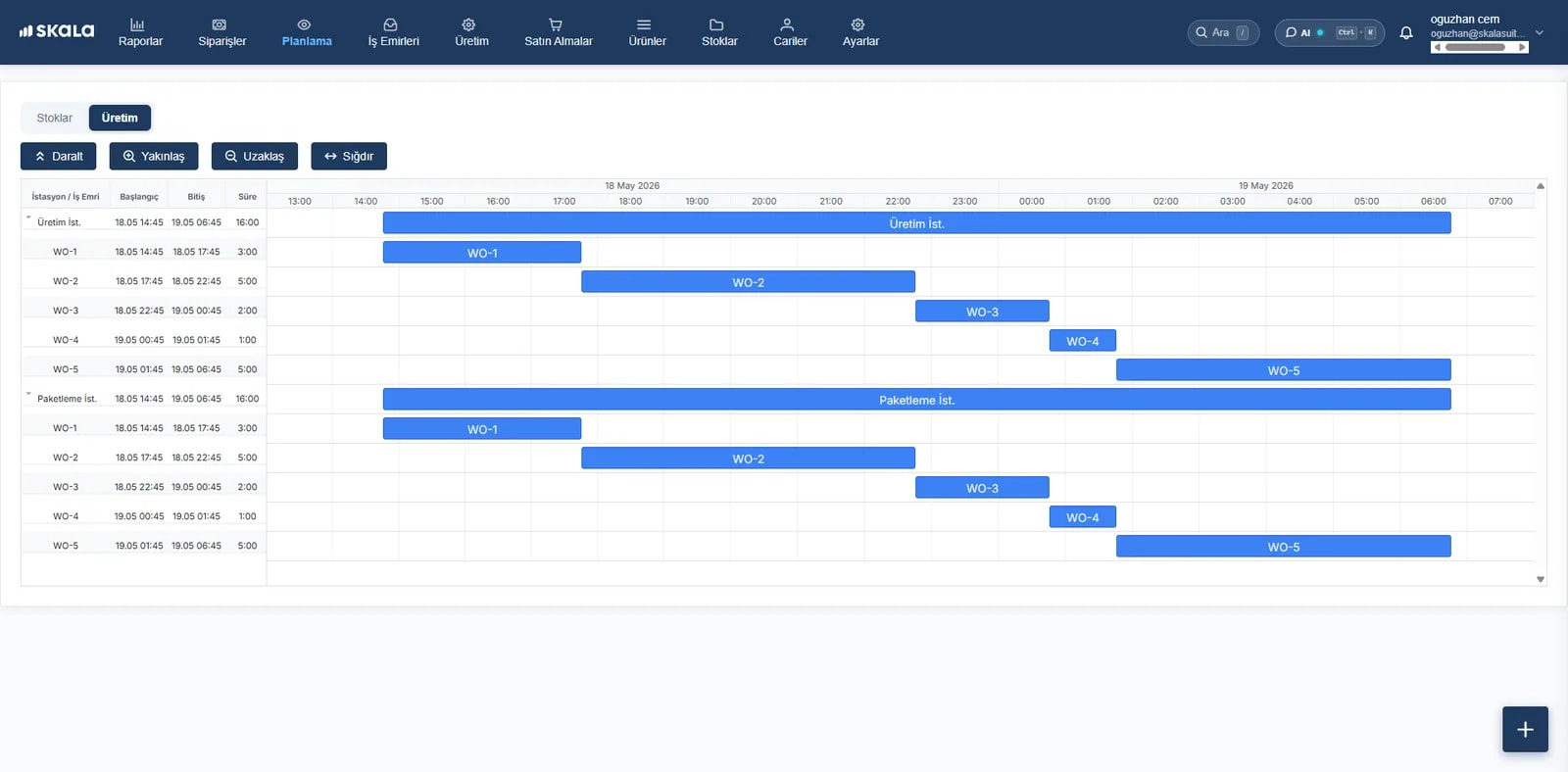






Why Lot-Based MRP Software Is Essential for Food Producers: Meet Skala, the Scalable and Affordable Cloud MRP
In today’s food production landscape, precision, traceability, and compliance are not just business advantages — they’re mandatory.
Chemical production tracking software
Define by formula how much of each raw material is needed for 1,000 kg. Produce semi-finished goods with their own lot and keep them in stock; see your product cost instantly when raw material prices rise.

How much of each raw material is needed to produce 1,000 kg is defined.
The mix enters stock with its own lot and is used in other recipes.
When raw material prices change, product cost updates itself.
In a chemical plant, every day goes by with the same questions:
In chemicals, the product is the recipe itself. When one component is two percent short, the product causes problems at the customer; when raw material prices rise, your cost changes without you noticing.
In Skala, formula, semi-finished and finished goods sit in the same chain. Dosage deviation shows before the batch closes, and cost updates itself with raw material prices.
You produce a mix as a semi-finished good and receive it into stock with its own lot; then you use that semi-finished good in other recipes. For example, you derive products in different colours from one base.
When a raw material price changes, the cost of the semi-finished good and every finished product that uses it updates itself.

Raw materials, semi-finished and finished goods are kept in stock by lot. Every batch carries the lots it came from.
When you enter a problematic raw material lot, you instantly see which batches used it and which customers those batches went to.
The operator sees the dosage on their own screen and enters what they actually added. Planned and actual sit side by side; any deviation shows before the batch closes.

You track raw materials with their lot and shelf life; lots nearing expiry rise to the top of the list.
With Skala WMS you receive, put away and ship by scanning barcodes, and manage the hazardous materials area as a separate section.
Planned consumption in the formula sits next to what was actually used. Waste is entered from the floor and posted to the batch cost; when the batch closes you see the real cost per kilogram.
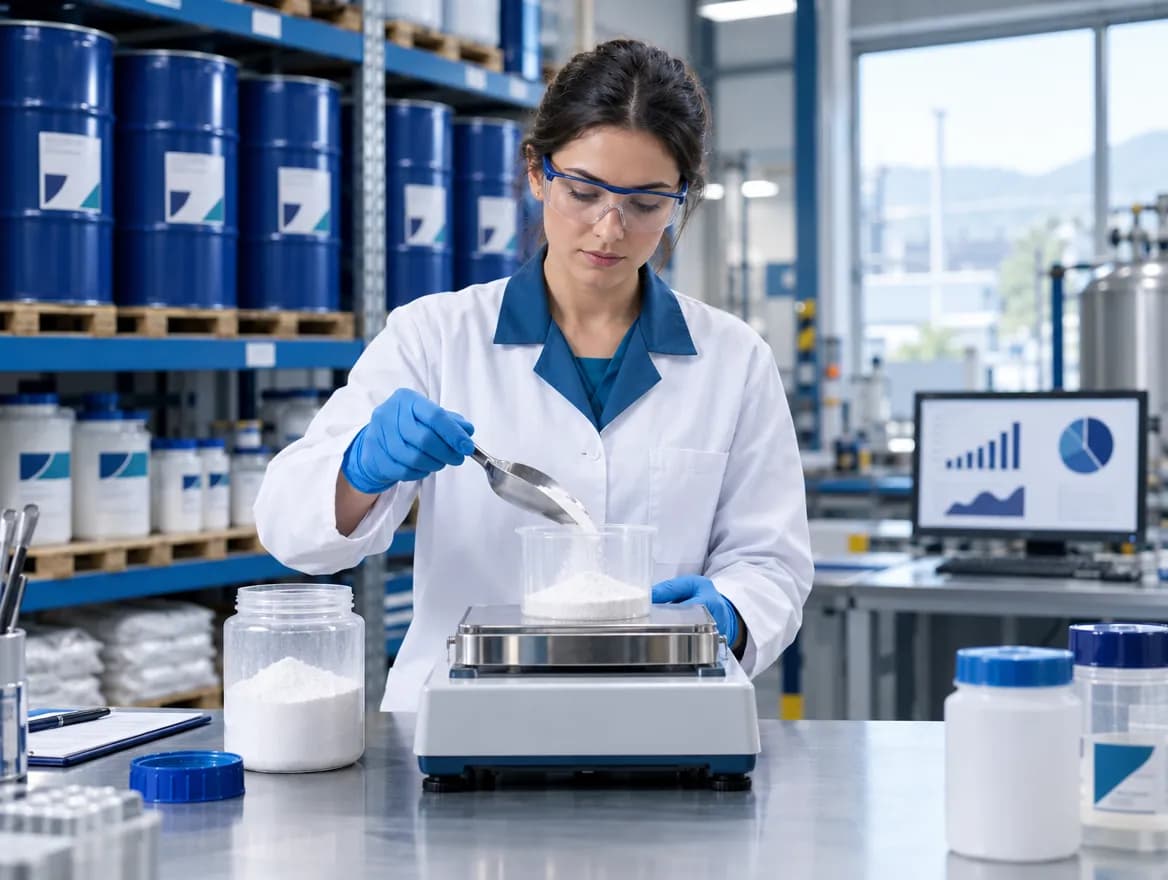
All in the same system. No separate programs, files or notebooks.
Define how much of each raw material is needed for 1,000 kg.
Produce mixes as semi-finished goods and use them in other recipes.
Product cost updates when raw material prices change.
Track raw materials, semi-finished and finished goods by lot.
See the whole production chain from one lot number.
See planned and actual dosage side by side.
Link viscosity, pH and density results to the batch.
See raw material lots nearing expiry in advance.
Compare planned and actual consumption.
Your accounting software, your online store and Skala use the same data. You never enter the same product in two places.
Most production software turns into a months-long project: consultants come, training ends and the system still goes unused. You start using Skala the day you sign up, and setup takes less than a week. You buy no servers, licences or hardware. Screens are written in the language of production. Operators need to learn three buttons: Start, Pause, Complete.
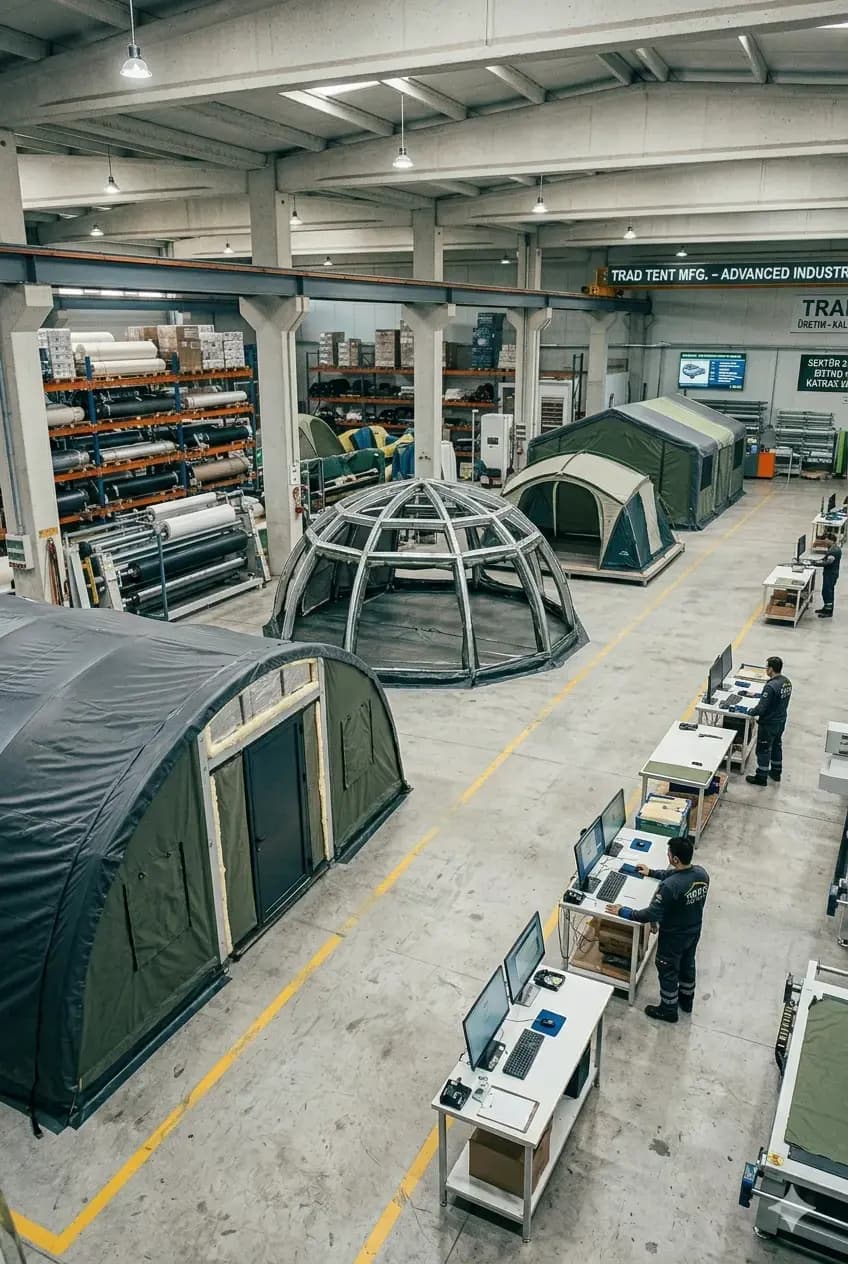 Moonzelt · Tents and outdoor structuresRuns multi-channel orders on live dataShopify and marketplace orders are fulfilled from one central stock; overselling and delays are gone.Shopify integrationLive stockRead the case study
  Atölye Reklam · Signage and advertisingCut production errors to a minimumMoved away from manual tracking; work orders live in one panel and errors are caught at the source.Work ordersEfficiencyRead the case study
  ST Duşakabin · Shower cabins and bathtubsProduction and orders in one systemGlass, metal and accessory components, orders and stock in one place — and a support team they rate highly.Order managementFast onboardingRead the case study
 For general questions, see our frequently asked questions page.
Yes. You define as a formula how much of each raw material every product needs. When a batch goes into production the requirements list comes out automatically; the operator sees the dosage on their own screen and enters the amount actually used.
Yes. You can produce a mix as a semi-finished good, receive it into stock with its own lot number and then use it in other products' recipes. Deriving products in different colours from one base, for example, is managed this way.
Yes. When you update a raw material price, the cost of the semi-finished and finished goods that use it is recalculated. The whole chain is updated in one go.
Yes. The planned quantity in the formula sits next to the actual quantity on the floor. Any deviation shows before the batch closes, so you catch the error before the product reaches the customer.
Raw materials, semi-finished and finished goods are kept in stock by lot. Every batch carries the lots it came from; with one lot number you can map your production history backwards.
When you enter a problematic raw material lot, you instantly see which batches used it and which customers those batches went to. You apply the recall only to the affected batches.
Yes. You add quality control steps to the production flow. Test results are linked directly to the related batch; who approved it and when stay on record.
Yes. You track raw material lots with their shelf-life information; lots nearing expiry rise to the top of the list. You can define the hazardous materials area as a separate warehouse or section and follow its movements separately.
In today’s food production landscape, precision, traceability, and compliance are not just business advantages — they’re mandatory.
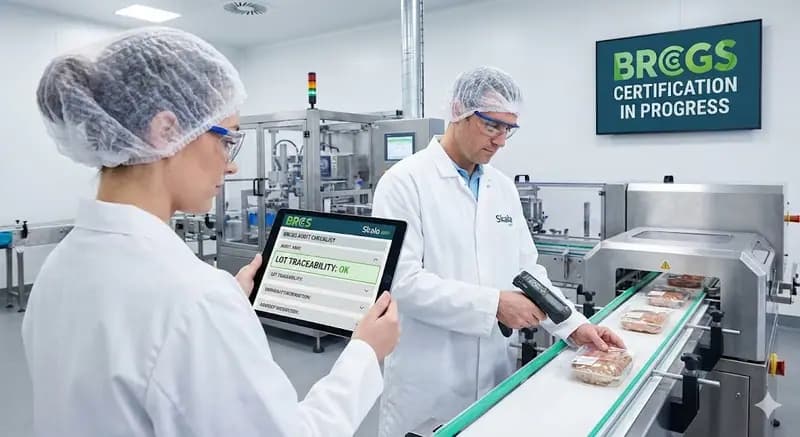
Preparing for a food safety audit? Read our step-by-step guide to BRCGS certification, master lot traceability and free pre-audit checklist.
Don't recalculate cost by hand when raw material prices rise. · Don't learn about dosage deviations from customer complaints. · Don't discover raw materials past their shelf life in the warehouse.